An equipped mobile unit
For a moving site, specify the transport and parking conditions. Ask for details of water, energy and filling or emptying operations.
Equipped units · Mobile welfare units · Project duration
Compare welfare cabin hire for the spaces your teams need, from mobile units to a group of static cabins. Match the facilities to the workforce, then include hire charges, delivery, servicing and collection for the full project duration.
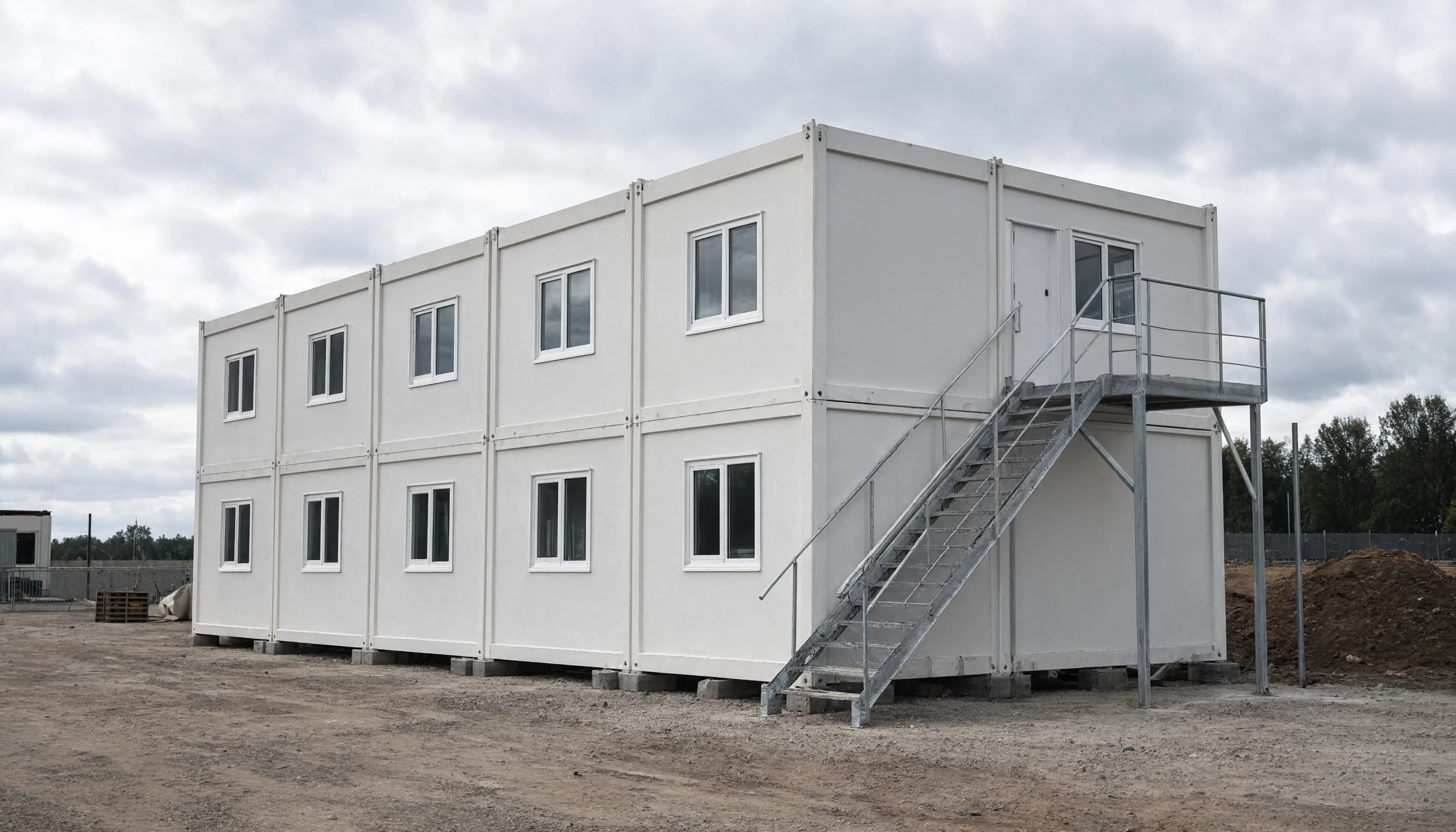
Specify the number of people on site at the same time, the intended uses and the facilities already available. The supplier will then be able to propose the layout and corresponding equipment.
For a moving site, specify the transport and parking conditions. Ask for details of water, energy and filling or emptying operations.
To combine offices, changing rooms, rest and eating areas and toilets, request the complete layout. Ask for the offloading, assembly, access and connections to be quoted.
If the site already has certain facilities, describe them. You can request an additional office or toilets depending on the need to cover.
No UK hire sample is published on this page. Agree the facilities, dates and servicing before comparing rates; an advertised number of seats is not a full welfare specification.
Specify the exact units, usable facilities, fittings and capacity for the proposed workforce and working hours.
Include delivery, offloading, supports, assembly, water and drainage arrangements, electricity and commissioning before work starts.
Price cleaning, consumables, tank emptying and water replenishment, maintenance, emergency replacement and final collection.
Ask for the charge period, VAT, minimum hire, extension and notice terms, and every delivery or collection charge. Commercial hire terms do not change the requirement to provide suitable welfare from the start and throughout the work.
Request an itemised quotationProvide a desired delivery date and an expected end date. The hire company must specify how this period will be charged.
Ask about the minimum charge and fixed delivery and collection costs. Using the unit for just a few days may still involve a longer billing period: ask the hire company to confirm this.
Ask for the entire period to be priced using the rate corresponding to your hire length. Specify the frequency of required services, such as emptying or maintenance.
Ask for a base hire period and the price of an extension. Ensure the notice period and the procedure for confirming the new date or arranging collection are stated.
The minimum billed hire period is a commercial condition. It is separate from the duty to provide welfare on short projects. Ask for delivery and commissioning before work begins, and maintain provision until the work ends.
Have these points included in the quote or the hire conditions.
Have the billing start date and its link with delivery or handover stated. Confirm the minimum charge and the rule for a partial month.
Ask for the extension rate, notice period and confirmation procedure. Check whether a change in duration affects the original rate.
Have it specified who requests collection, the lead time and the date hire charges stop. Check lorry access and preparation of the modules.
Have cleaning, draining, dismantling and reinstatement itemised. Ask about the rules for returning the security deposit and insurance conditions.
Record with the supplier the condition of the modules, furniture and equipment delivered. Keep photos, any reservations and delivery documents. At collection, have the return condition and services carried out noted.
For construction work, these provisions come from CDM 2015 Schedule 2 in England, Wales and Scotland, and CDM 2016 Schedule 3 in Northern Ireland. Plan them before work starts and keep them available throughout the work.
Provide sufficient suitable toilets in readily accessible places. Keep them and their rooms clean, ventilated and lit so far as reasonably practicable. Separate rooms for men and women are required unless each toilet is in its own room that locks from the inside.
Include in the specification: Confirm the number and layout, safe routes, toilet paper, sanitary waste arrangements, cleaning and servicing. A weekly emptying visit does not replace cleaning between visits.
Legal provisions: paragraph 1 of GB Schedule 2 / NI Schedule 3.
Washing facilities belong beside toilets and near required changing rooms. They must include clean hot and cold, or warm, water, with running water so far as reasonably practicable, cleaning products and a way to dry. Provide showers where the work or health risks require them.
Include in the specification: Choose a basin large enough for hands, face and forearms. Specify the heater, water supply and replenishment, soap and towels or dryers. Hand sanitiser alone is not a replacement for suitable washing facilities. Keep washing separate from eating and rest areas where hazardous substances could contaminate food.
Legal provisions: paragraph 2 of GB Schedule 2 / NI Schedule 3.
Provide accessible rest rooms or areas with enough tables and seats with backs for simultaneous users, arrangements to prepare and eat meals, and a way to boil water. Maintain an appropriate temperature. Provide for pregnant or nursing workers to rest lying down where necessary.
Include in the specification: Agree break-time occupancy, food preparation, heating and ventilation. Keep the space clean and free of stored plant, tools and materials; an office label alone does not make a cabin a suitable rest area.
Legal provisions: paragraph 5 of GB Schedule 2 / NI Schedule 3.
Use HSE's checks to plan toilets and washing and changing, drinking water and rest. For Northern Ireland, check who is responsible under HSENI's guidance.
Connect or fill the water supply; test hot or warm washing water, lighting, heating and toilets. Confirm drinking water, soap, drying materials, toilet paper and the rest area are ready.
Name the person who checks supplies and cleanliness, books tank services, responds to faults and updates provision as the workforce or work changes.
Keep replacement facilities available while units are disconnected, moved or removed. Welfare remains necessary during mobilisation and demobilisation.
Agree who provides drinking water, changing, secure clothing storage and drying, and showers where required. If the hired unit covers only some of these needs, identify the other available facilities in the site arrangements.
A clear list of services helps you prepare the site and compare quotes.
Location and supports approved, lorry access, lifting, assembly and connections. Divide the tasks between your team and the supplier.
Maintenance, cleaning, breakdown assistance, water and energy. If tanks are fitted, specify filling, emptying, access and frequency of visits.
Furniture inventoried, cleaning and emptying in accordance with the contract, disconnection and dismantling assigned to the planned contractors. Maintain the required access for collection.
Also get a quote for purchase, then add transfers, storage and maintenance. Compare both solutions based on the actual uses planned, with the same equipment.
A standard hire and a finance agreement with purchase option involve different conditions. A monthly amount alone is not enough to compare them: check duration, any deposit, services and purchase price.
Compare site welfare unit hire costs and purchase budgetsDescribe the number of people, uses and working conditions. A commercial capacity or the mention 'equipped' does not by itself describe all the necessary facilities.
See benchmarks for site facilitiesDuration, workforce, equipment and site location: prepare your request to compare proposals. Free and without obligation.
Compare quotesCompare hire prices and all items in the quote.
ReadSpecify the workspace and the equipment required.
ReadDefine the equipment and available services.
ReadUK welfare guidance reviewed on 28 September 2026. The directory prepares enquiries; the hire company confirms the equipment, services, current price and contract.