Chilled storage
For goods that need chilled storage: specify their required temperature, the unit set point and expected door openings.
Specify this cooling requirementTemperature · Duration · Delivery
Hiring a refrigerated container, also known as a reefer, starts with the goods and the temperature they need. Specify your set point, hire period and postcode to compare cold-storage quotes including delivery, power requirements and support.
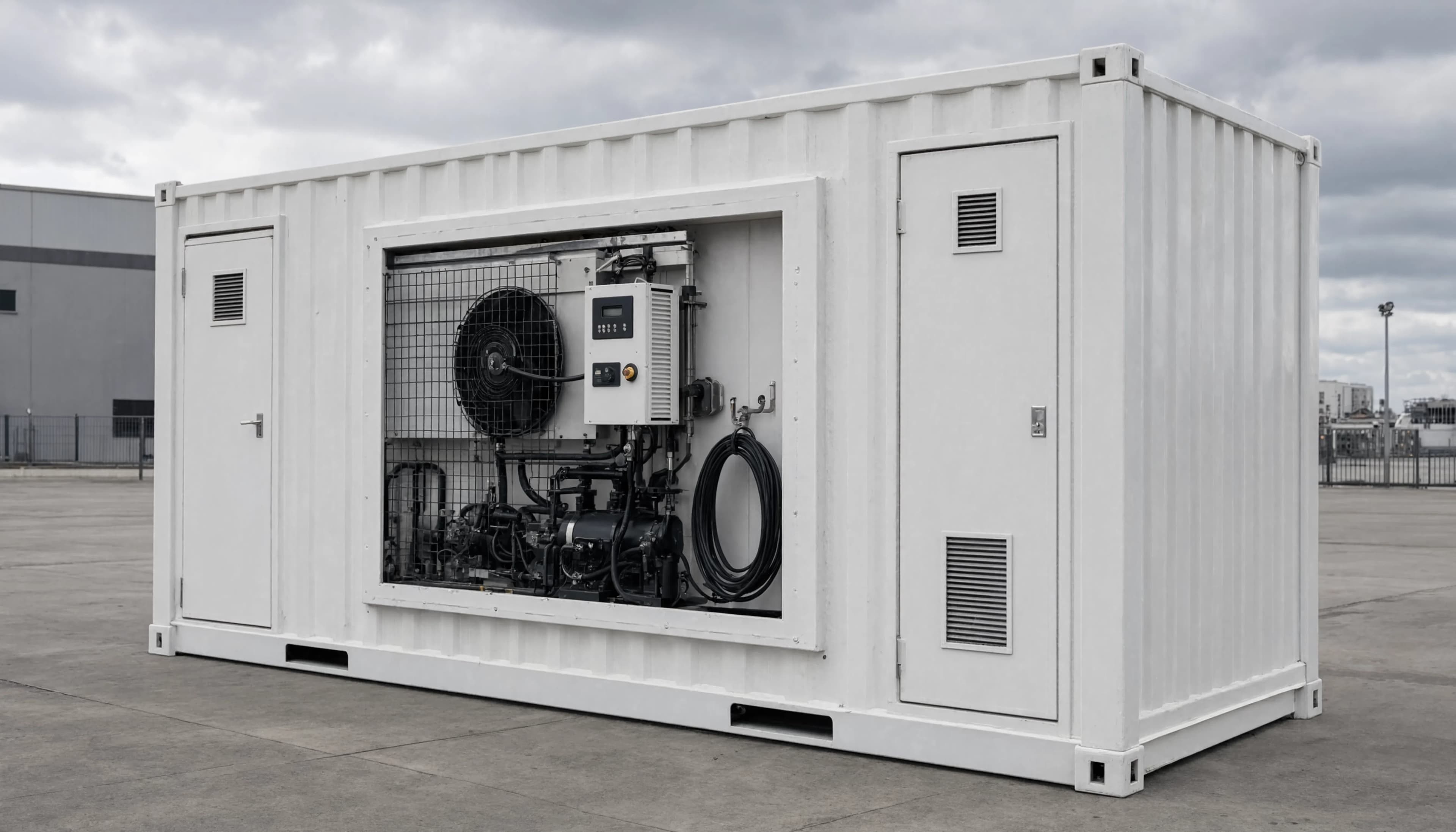
No verified UK refrigerated-container hire rate is published here. Request a dated quote for the actual unit, set point, goods, location and hire period.
Chilled or frozen storage still needs a product-specific set point. State the goods, their arrival temperature and the conditions they need throughout storage.
For goods that need chilled storage: specify their required temperature, the unit set point and expected door openings.
Specify this cooling requirementFor goods that must remain frozen: specify their required storage temperature and temperature on arrival. Confirm the unit can maintain those conditions.
Specify this cooling requirementDescribe the exact need to have specialised equipment proposed. No model is validated solely by selecting this category.
Specify this cooling requirementState whether your products already arrive at the correct temperature or whether they need to be cooled or frozen. These requirements must be confirmed separately: a low set point does not guarantee a rapid temperature pull-down.
In some transport reefers, the goods must already be at the intended temperature before loading: have the model’s requirements confirmed.
A refrigeration set point is not proof that food is at a safe temperature. Include the relevant product limits, monitoring, loading, cleaning and response to power or equipment failure in the business’s food-safety procedures based on HACCP principles. Check the actual goods and process with the responsible food-safety team and local authority.
For foods covered by the general chill-holding rules, England, Wales and Northern Ireland normally require 8 °C or below. Exceptions and stricter product requirements exist. Setting the fridge at 5 °C or below is government advice to help keep food cold enough, not a universal legal set point. Scotland has separate temperature-control rules without the same general fixed chill limit; food must still be kept safely. Confirm the limits for your actual products and process.
Read the government’s chilling and freezing guidance and Food Standards Scotland’s temperature-control guidance. Record checks of the food as well as the unit, and agree what happens to stock after an unsafe temperature excursion.
For a breakdown, a season or an event, the date and conditions of use matter as much as the size.
Type of products, packaging, maximum quantity and temperature on arrival. Mention any specific requirements for your business.
Number of pallets or containers, dimensions, handling method and frequency of openings. Indicate whether a loading ramp is required.
Requested start date, expected end date and possible extension. For urgent needs, ask the supplier to confirm availability and delivery slot.
Provide the number and dimensions of pallets or packages. The supplier must offer a model that leaves the necessary walkways and airflow for your use.
Ask for the internal dimensions, door opening and permitted loading plan of the proposed 20ft reefer. Insulation and refrigeration equipment reduce the usable space.
Request this sizeRequest a larger capacity with the layout plan of the selected model. Also specify the space available for delivering, using and collecting the container.
Request this sizeReefer internal dimensions and usable capacity vary by manufacturer, insulation and refrigeration equipment. Ask for the technical sheet of the exact unit being offered; nominal external size alone does not establish the available loading space.
Ask for the dimensioned plan, door opening and permissible loading with your packaging. Respect the air flow and loading limits of the model: not all geometric volume becomes stackable cargo volume.
Provide the address, photos of the access and details of the available power supply. Ask the supplier to confirm any necessary works before delivery.
Gate width, bends, gradient, obstacles and distance from the lorry to the installation point. Ask the supplier to confirm the lifting method and ground support.
Available power supply, socket, distance to the container and cable routing. Ask who supplies, installs and checks the connection.
Set temperature, tests, familiarisation, alarms and loading plan. Specify the date by which storage must be operational.
Ask the supplier for the exact unit’s voltage, phases, frequency, current, connector, protective devices and starting requirements. Have a competent electrician confirm that the site supply and connection are suitable before delivery.
For the energy budget, ask for an estimate suited to the set point, load, door openings and site conditions. State who pays for electricity. If a generator is needed, have its hire, fuel supply and servicing costed separately.
Ask what services are included and the response arrangements before comparing two hire rates.
Cleaning, unit checks, consumables, temperature records and scheduled maintenance during the hire period.
Contact in case of alarm, support hours, contractual response time and planned solution if the equipment has to be replaced.
Have responsibilities, insurance and any cover for the goods clarified. Container hire and contents cover must be considered separately in the contractual documents.
Ask which refrigerant the unit contains and its charge. Where F-gas rules apply, establish who arranges required leak checks, records, repairs and recovery, and use personnel and companies with the qualifications or certification required for that work. In a hire arrangement, the responsible party can depend on the agreement and who controls the equipment; a service package alone does not resolve every duty.
Use the Great Britain guidance and its leak-check responsibilities. Northern Ireland follows the EU F-gas system: consult DAERA’s Northern Ireland guidance. Requirements depend on the gas, charge and equipment category; this page does not apply one inspection interval to every reefer.
Container and unit reference, condition, accessories and maintenance or test documents agreed in the quote.
Checks of the connection, set-point programming and tests carried out by competent technicians.
Storage plan, product temperature on entry, loading limits and airflow instructions specific to the model.
Use of doors and alarms, expected monitoring, support contact and procedure to follow if the temperature deviates from the set point.
Temperature, size, duration and location: prepare your request to get the container priced with delivery and any required services.
Request refrigerated hire quotesCompare a storage container delivered to your site.
ReadChoose the size and prepare the hire budget.
ReadDescribe specific openings, equipment or uses.
ReadThis page helps you prepare a refrigerated-container hire enquiry. Confirm current prices and availability directly with the supplier; the directory does not hire out these containers.
Check these details before comparing equipment, delivery and services.