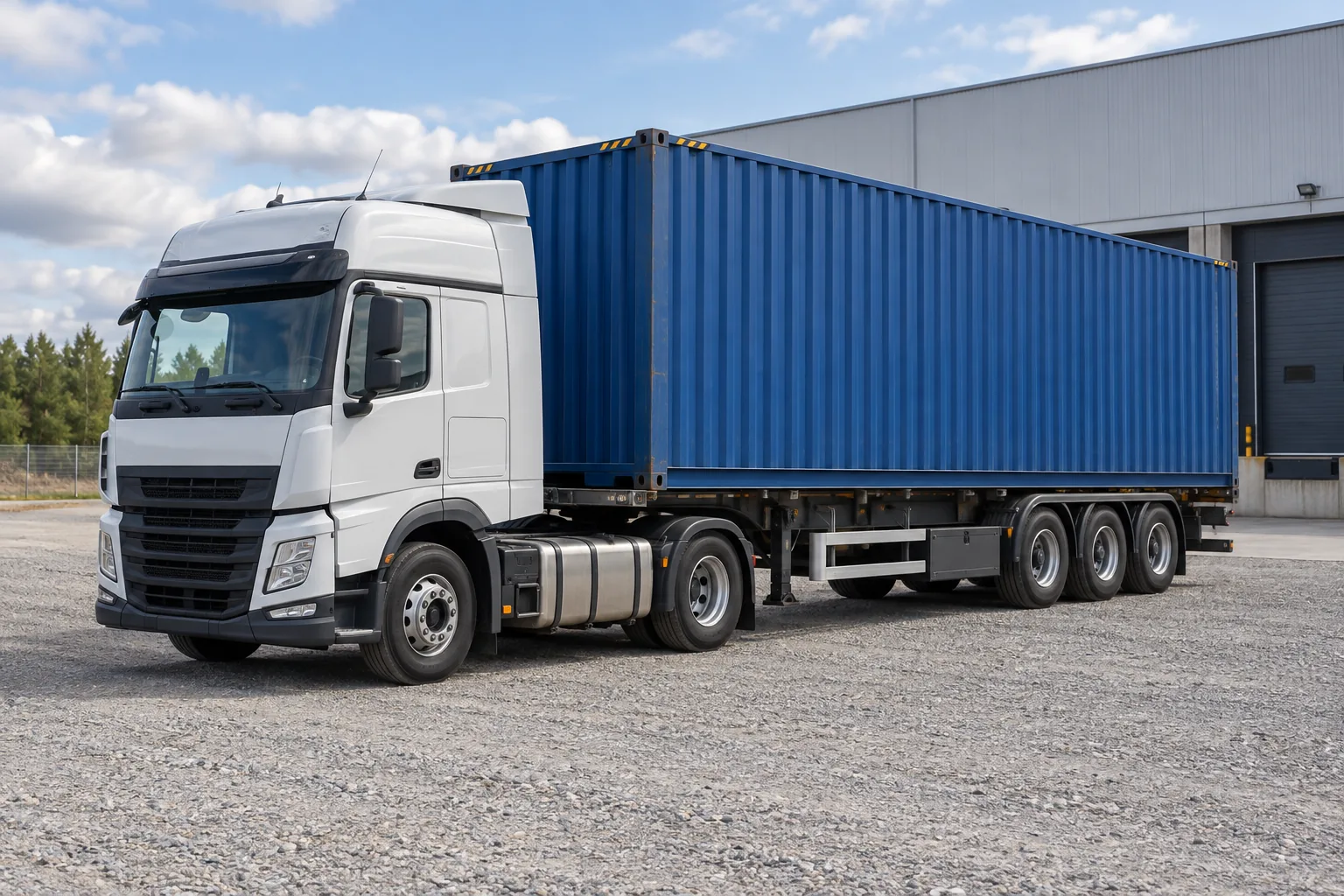
Shipping container delivery, transport and offloading
Compare the full cost of a shipping container delivered and offloaded where you need it. Describe the access and final position, then ask for the container, road transport and offloading to be priced separately.
Three items to compare
1
The container
Size, condition and quantity. For hire, include the planned period, rate and billing dates.
2
Transport
Departure from the depot, arrival address, route and vehicle access conditions.
3
Offloading
Lifting method, drop-off position and placement services.
Send a postcode, photos of gates and bends, and the distance from the lorry to the final position. Ask whether the quotation covers offloading and placement at that exact point.
Shipping container transport cost depends on the departure depot, delivery postcode, container and offloading method. Request a quote for those details; this guide does not publish a UK delivery tariff.
Ask for an itemised delivered quotation.
State the number, size and loaded or empty weight of the containers. Ask the supplier to identify transport, lifting, positioning, VAT and any waiting, access or return charges separately.
The route, access and lift plan affect the price. Do not infer a delivery charge from a container’s advertised purchase or hire price, or assume offloading is included.
Who offloads the container on arrival?
State from the outset whether you have on-site handling equipment. The haulier and lifting provider must confirm the vehicle and equipment for the weight, access and final position.
To be arranged with the supplier
Crane lorry delivery
The vehicle transports the container and lifting equipment handles the offloading. Ask for clarification on the possible position of the lorry and the reach required.
To be confirmed: working space and final position.
Services to coordinate
Separate transport and crane
The haulier brings the container and a lifting contractor unloads it. Agree who supplies the crane and coordinate its arrival with the lorry.
To be confirmed: who books and invoices the lifting.
You take care of the offloading
Equipment already on site
Describe the available equipment and its operator. Its presence is not enough: its suitability for the container and the operation must be confirmed.
To be confirmed: capacity and handling method.
Delivery to the gate and placement at the chosen location do not cover the same service. Have the expected drop-off point written into the quote.
For lifting at work, agree who plans and supervises the operation. A competent person must plan the lift, with appropriate supervision and safe execution. Check the chosen equipment, load, ground support, exclusion area and required examination records before delivery.
Equipment used at work must also be suitable, maintained and used by people with appropriate information, instruction and training: see PUWER 1998 in Great Britain and PUWER 1999 in Northern Ireland. Agree the duties of the equipment provider, operator and site team. A hired crane or forklift is not automatically suitable for every loaded container; establish the actual load and lifting method before work starts.
Four site details for preparing your delivery
Prepare this information before contacting the supplier. A few photos and measured dimensions will help them assess the delivery; access and support conditions still need to be confirmed by those involved.
01
The entrance
Photograph the gate and note its usable dimensions. Indicate access times and any known restrictions.
02
The lorry route
Show bends, slopes, narrow passages and overhead obstacles between the street and the drop-off point.
03
The unloading area
Identify the possible vehicle position, the space available around it and the distance to the desired location.
04
The final location
Show the ground and the planned supports. Indicate the direction the doors open and the space to keep clear for using them.
The container footprint is not enough.
Also allow for vehicle arrival and exit, the lifting work area and door opening. The required width depends on the lorry and handling method chosen: have your case checked before scheduling the delivery.
Draw the final container position, the vehicle route and the offloading area separately. Identify soft or recently filled ground, buried services, manholes, drains and any place where stabilisers cannot be set. The support arrangement must suit the actual model, contents and modifications; ask for a support plan for this installation.
Agree who assesses the ground, provides the supports and checks the finished levels before dispatch. Keep water runoff clear of the base and allow room for doors, maintenance and later collection. If doors become stiff after placement, ask the responsible team to check support and level; do not force them or improvise structural adjustments.
Before the lorry leaves the depot, confirm the assessed route, support readiness, receiving contact and any parking or traffic arrangements. After the haulier confirms the working area is safe, record the unit’s condition, position and door operation using the agreed delivery-reporting procedure.
Your project record · no automatic assessment
Prepare your container delivery site record
Keep the position, access route and offloading area separate. This records what the haulier and site team need to assess; it does not design supports or approve a delivery or lift.
Start with what you know; leave the rest unknown. Entries stay in this tab until you choose to copy, download or open the quote form. Refreshing clears them. Do not enter confidential or sensitive information.
Record the actual site measurements and responsible people. The tool supplies no foundation dimensions, bearing capacity, crane reach or approval.
Model, modifications, contents and known mass; distinguish empty delivery from any loaded move.
Drawing reference, measured footprint, door swing, access for goods, maintenance and later collection.
Gate clear width/height, bends, slopes, overhead obstacles and route photos; name each measurement point.
Surface, recent fill, soft or wet areas, manholes, trenches, buried services and water runoff; unknown conditions need assessment.
Distance to placement, overhead lines, space for stabilisers and exclusions; the haulier chooses and validates the method.
Ground contractor, haulier, person receiving the unit, drawings/photos and collection or later moves.
Checks and evidence to keep
Record who said what, the date and a document or photo reference. “Evidence noted” does not verify a claim; explain any “not applicable” choice.
7 checks unknown or unverified; 0 marked for follow-up. These counts do not score the project or decide whether to proceed.
Preview: notes carried into the quote form
Review this text before continuing. You can edit it in the form; opening the form does not submit a request.
The summary is added to the quote-form URL when you follow the link and may appear in browser history. Container quantity is left for you to check in that form. This tool sends no enquiry, email or supplier notification.
Compare like-for-like delivery quotes
To compare two offers, provide the same size, same condition and same address. Then ask for a breakdown of the items below.
Points to clarify on the quote
Item
What you should be able to compare
Container
Size, condition, quantity and included equipment.
Transport
Departure depot, delivery address, time slot and transport costs.
Offloading and positioning
Service provider, planned equipment and agreed final position.
Waiting or access difficulties
Billing conditions in the event of waiting, postponement or re-delivery.
Hire
Duration, return costs, collection and return conditions.
Total
Ex VAT and inc VAT amounts, included services and items remaining your responsibility.
Request a container quote including delivery.
A single request to specify the equipment, location and offloading. You can then compare proposals on the same basis.
Check the terms of the offer. Request a total that separates the container, transport and offloading. A price quoted from a depot is not enough to know the cost at your address.
Does the lorry always offload the container?
Offloading must be explicitly arranged. Depending on the offer and site conditions, it may be carried out by an equipped lorry, by another lifting provider or by suitable equipment already on site.
What width is needed to get the lorry in?
This depends on the vehicle selected and the manoeuvres required. Record the gate dimensions, turns, obstacles and space near the placement point, then have the transport provider confirm the access.
What should be planned for collecting a hired container?
Have the return and collection costed from the initial quote. Confirm the return conditions and keep the access required for collection at the end of the hire.
I already have a container: does this form allow me to book its transport?
This form prepares a request to buy or hire a container with delivery. To move a container you already own, check the activities and contact details of businesses in the supplier directory to find a suitable contact.