Fixed site
Modules to combine
Distribute offices, canteen, changing rooms and toilets across one or more modules. Request a layout plan showing the capacity of each room.
Offices · Changing rooms · Canteens · Toilets
Choose site welfare units around the facilities your workforce needs. Arrange toilets, proper washing, drinking water and rest facilities before the team starts. Add changing, drying and showers where the work requires them, then get the complete installation and servicing quoted.
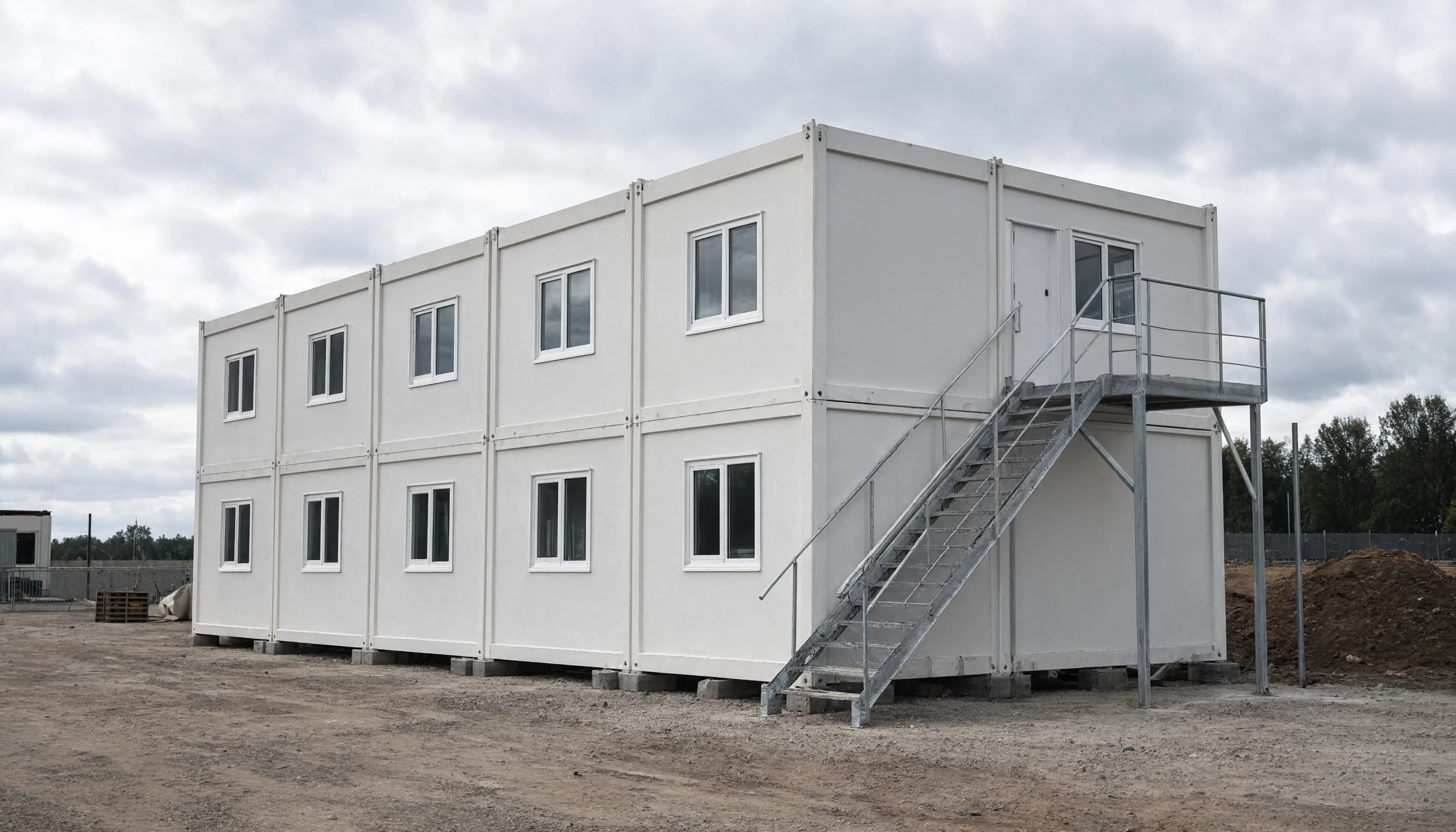
Site welfare facilities bring together the spaces used by teams to change, eat, wash and, depending on the project, work in an office. Start with the uses and the number of people present at the same time.
Fixed site
Distribute offices, canteen, changing rooms and toilets across one or more modules. Request a layout plan showing the capacity of each room.
Mobile team
For a towable mobile unit or a cabin moved by lorry, specify movement frequency and available services. Check the transport method and what is self-contained: toilets, water storage, electricity or heating.
Existing installation
Add an office, changing rooms or toilets to the available facilities. Describe what already exists to avoid duplicating equipment.
In the quote, ask for furniture, heating, ventilation, hot water and kitchen equipment to be itemised. The term 'equipped welfare unit' alone does not tell you the exact contents.
No verified UK welfare hire or purchase price sample is published here. Ask for the configuration and services your site actually needs; a dry shipping-container price is not a welfare-unit price.
Specify the exact units, usable facilities, fittings and capacity for the proposed workforce and working hours.
Include delivery, offloading, supports, assembly, water and drainage arrangements, electricity and commissioning before work starts.
Price cleaning, consumables, tank emptying and water replenishment, maintenance, emergency replacement and final collection.
Ask for the charge period, VAT, minimum hire, extension and notice terms, and every delivery or collection charge. Commercial hire terms do not change the requirement to provide suitable welfare from the start and throughout the work.
For construction work, these provisions come from CDM 2015 Schedule 2 in England, Wales and Scotland, and CDM 2016 Schedule 3 in Northern Ireland. Plan them before work starts and keep them available throughout the work.
Provide sufficient suitable toilets in readily accessible places. Keep them and their rooms clean, ventilated and lit so far as reasonably practicable. Separate rooms for men and women are required unless each toilet is in its own room that locks from the inside.
Include in the specification: Confirm the number and layout, safe routes, toilet paper, sanitary waste arrangements, cleaning and servicing. A weekly emptying visit does not replace cleaning between visits.
Legal provisions: paragraph 1 of GB Schedule 2 / NI Schedule 3.
Washing facilities belong beside toilets and near required changing rooms. They must include clean hot and cold, or warm, water, with running water so far as reasonably practicable, cleaning products and a way to dry. Provide showers where the work or health risks require them.
Include in the specification: Choose a basin large enough for hands, face and forearms. Specify the heater, water supply and replenishment, soap and towels or dryers. Hand sanitiser alone is not a replacement for suitable washing facilities. Keep washing separate from eating and rest areas where hazardous substances could contaminate food.
Legal provisions: paragraph 2 of GB Schedule 2 / NI Schedule 3.
An adequate supply of wholesome drinking water must be readily accessible. Mark drinking supplies where health or safety requires it. Provide suitable drinking vessels unless people can drink easily from a water jet.
Include in the specification: State who replenishes and checks mains, bottled or stored water. Keep drinking water protected from contamination and distinguish it from non-drinking supplies.
Legal provisions: paragraph 3 of GB Schedule 2 / NI Schedule 3.
Changing rooms are required where workers need special work clothing and cannot reasonably change elsewhere for health or propriety reasons. Provide seats, separate rooms or separate use by men and women where needed, and drying facilities where necessary. Provide secure storage for clothing and personal effects where needed.
Include in the specification: Allow for wet clothing and the number changing together. Keep contaminated protective clothing separate from ordinary clothes; specify lockers, seating and a safe drying arrangement.
Legal provisions: paragraph 4 of GB Schedule 2 / NI Schedule 3.
Provide accessible rest rooms or areas with enough tables and seats with backs for simultaneous users, arrangements to prepare and eat meals, and a way to boil water. Maintain an appropriate temperature. Provide for pregnant or nursing workers to rest lying down where necessary.
Include in the specification: Agree break-time occupancy, food preparation, heating and ventilation. Keep the space clean and free of stored plant, tools and materials; an office label alone does not make a cabin a suitable rest area.
Legal provisions: paragraph 5 of GB Schedule 2 / NI Schedule 3.
Use HSE's checks to plan toilets and washing and changing, drinking water and rest. For Northern Ireland, check who is responsible under HSENI's guidance.
Enter the workforce and project details. Your choices will be saved in the quote form.
Welfare checklist for 18 people over 7 months.
These facility requirements apply throughout the work. Use CDM 2015 Schedule 2 in Great Britain or CDM 2016 Schedule 3 in Northern Ireland. Select and service enough equipment for the site; the checklist does not certify compliance.
Equipment and points to considerGeneral guideline
Provide sufficient suitable, readily accessible toilets. Prefer flushing units where possible. Agree the actual number, use, cleaning, emptying, toilet paper and sanitary waste arrangements.
Washing facilities belong beside toilets and near required changing rooms. They must include clean hot and cold, or warm, water, with running water so far as reasonably practicable, cleaning products and a way to dry. Provide showers where the work or health risks require them.
Provide suitable showers where the nature of the work or health risks require them. Assess contamination, washing procedures, hot or warm water, drainage, privacy and any specialist decontamination needs.
Shared toilets must each be in a room that locks from inside, separate from any urinals. Hand, forearm and face washing can be shared; showers need separate provision or a lockable room for one person at a time.
Changing rooms are required where workers need special work clothing and cannot reasonably change elsewhere for health or propriety reasons. Provide seats, separate rooms or separate use by men and women where needed, and drying facilities where necessary. Provide secure storage for clothing and personal effects where needed.
Provide accessible rest rooms or areas with enough tables and seats with backs for simultaneous users, arrangements to prepare and eat meals, and a way to boil water. Maintain an appropriate temperature. Provide for pregnant or nursing workers to rest lying down where necessary.
An adequate supply of wholesome drinking water must be readily accessible. Mark drinking supplies where health or safety requires it. Provide suitable drinking vessels unless people can drink easily from a water jet.
Position facilities so workers can reach them readily throughout their working hours. Include remote work areas, safe pedestrian routes, servicing access and replacement provision during relocation.
Maintain an appropriate temperature in rest areas. Specify suitable heating and safe installation, including any risks from fuel-burning equipment.
Provide sufficient ventilation for washing rooms and suitable ventilation for toilets and occupied welfare areas. Keep heaters, air inlets and vents maintained and unobstructed.
Provide lighting for toilets, washing areas and access. Assign checks, cleaning, consumable replenishment and fault response before use; increase service frequency where conditions require it.
For 18 workers, the one-per-seven guidance gives 3 portable chemical toilets, rounded up, for a 40-hour week with weekly emptying assumed.
This illustrates HSE's cited guidance for portable chemical toilets, with a 40-hour working week and weekly emptying. It is not a statutory CDM minimum, a flushing-toilet calculation or proof that the facilities are sufficient. Longer use, shifts, servicing, privacy and the work may require more provision. For Northern Ireland, use Schedule 3 and confirm the arrangements under HSENI guidance. This illustration is separate from the quotation checklist.
Check toilet use and servicing assumptions with HSEFree, no-obligation request.
Your choices will be included in the quote. You will be able to specify the modules, connections and delivery. These guidelines do not replace validation of the site configuration.
A few details about your site will help prepare installation and avoid a quote that is missing items.
Gate width, bends, overhead obstacles and distance between the lorry and the module location. Include photos.
Location, level and supports to be approved, passages between modules, doors and team access.
Available electricity, drinking water and drainage, distance to services and remaining work to plan. For off-grid use, specify filling and emptying.
Who assembles, connects, checks and cleans? Also ask for clarification on toilet cleaning and removal at the end of the project.
Ask the supplier for a dimensioned drawing of the proposed configuration, in PDF or DWG if your team uses that format. Check the footprint of the modules, doors, access routes, connections and handling areas. Have the layout approved for the ground conditions and site organisation.
Prepare the site layout planCompare both options with the same rooms and equipment, over the intended period of use.
Cost the hire rates, delivery and collection, and included services. Ask about the minimum charge, extension terms and the notice period to arrange collection.
Compare hire offersIf you reuse the modules, factor in transport, storage and maintenance. For used units, check weathertightness, insulation, internal condition and electrical and plumbing installations.
Compare purchase offersThere is no universal duration after which purchase becomes more advantageous. Do the calculation for one project, then for the reuses you actually plan.
Prepare the hire period, contract and collectionThe commercial client must ensure arrangements are made; the principal contractor coordinates welfare throughout a project with several contractors. Each contractor also has duties for the workers under their control.
Connect or fill the water supply; test hot or warm washing water, lighting, heating and toilets. Confirm drinking water, soap, drying materials, toilet paper and the rest area are ready.
Name the person who checks supplies and cleanliness, books tank services, responds to faults and updates provision as the workforce or work changes.
Keep replacement facilities available while units are disconnected, moved or removed. Welfare remains necessary during mobilisation and demobilisation.
A short duration, small workforce or mobile work does not provide a general exemption. Existing facilities can be used only when the arrangement is suitable, agreed and available whenever workers need it. Hiring equipment does not transfer all CDM responsibilities to the hire company.
Read the detailed CDM welfare requirementsYour site, a complete budget.
Number of people, duration, equipment and delivery: prepare a request to compare supplier quotes. Free and without obligation.
Specify the workspace and office equipment.
ReadChoose the equipment and prepare the connections.
ReadFor equipment and storage: sizes, purchase and delivery.
ReadUK welfare guidance reviewed on 28 September 2026. Request current equipment and servicing prices from the supplier; the directory prepares enquiries.
Check these details before comparing equipment, delivery and services.